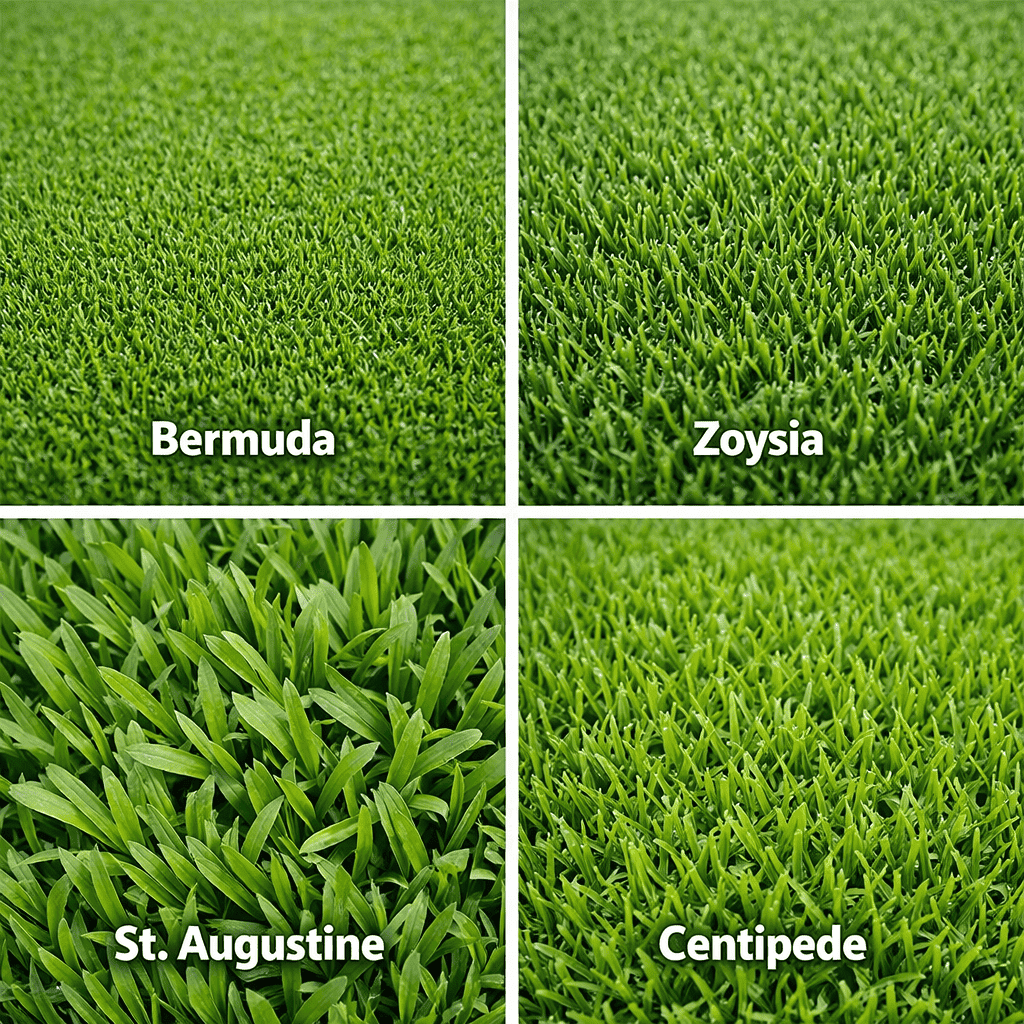

Many Turf Types Are Now Highly Engineered
Many homeowners are surprised to learn that in large areas of the Southeast, there are no native turf types. Advances in turf science have led to widespread use of engineered grass varieties designed for specific performance and appearance.

Frequent Care Requirements
Because of their engineered nature, modern turf varieties require frequent mowing to perform as intended. Without consistent cutting, many lawns never develop the tight, dense growth these grasses are designed to produce.

Future-Ready Lawns
AutoMow offers permanent landscape solutions that optimize properties for robotic mowing and resolve long-term landscaping challenges.

With Bermuda grass, mowing frequency teaches the turf how to grow. The lower and more frequently it is mowed, the more the grass learns to lay down, tighten up, and grow denser, resulting in a healthier lawn that focuses its energy on lateral growth instead of standing upright. When Bermuda is not cut often enough, it adapts by growing vertically and concentrating its green growth near the top. Each mowing then removes most of that green tissue, leaving the lawn looking brown or stressed. Turfgrass science has shown what Bermuda is capable of under ideal frequency, but traditional mowing schedules make it difficult for most homeowners to ever experience the grass at its full genetic potential.
This same principle applies to other warm-season grasses such as St. Augustine, Zoysia, and Centipede, though the effect is not as extreme as with Bermuda. While these grasses do not require the same ultra-frequent cutting, they still respond positively to consistent mowing by growing more uniform, thicker turf and experiencing less overall stress. Reduced stress allows the grass to allocate more energy toward health and recovery, which improves density and naturally increases resistance to disease.