1. It maintains. It does not reclaim.
Not a bush hog
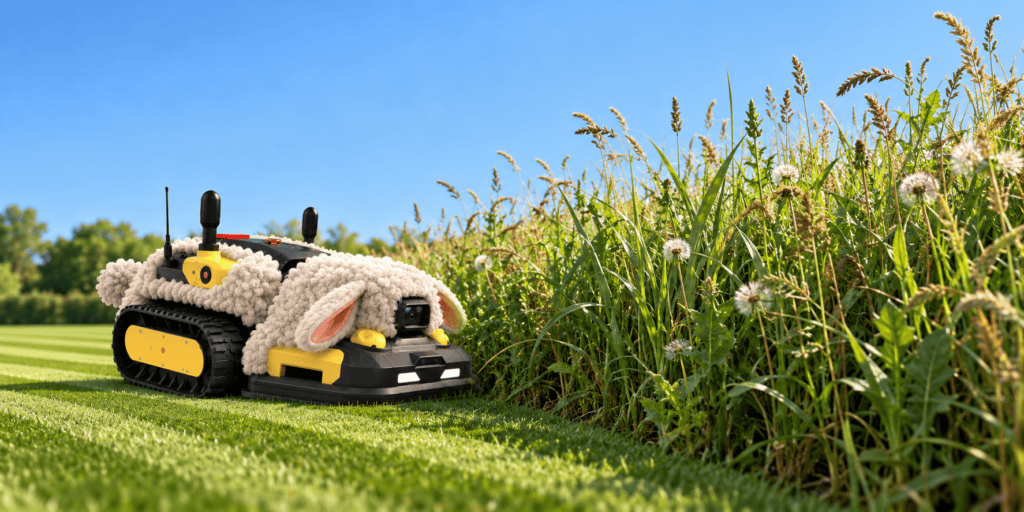
Your robot is turf maintenance equipment. It keeps an established, regularly mowed lawn sharp. It is not built to reclaim overgrown ground, cut through brush, or recover a lawn that has gone weeks without mowing.
2.Mow as low as your lawn is level.
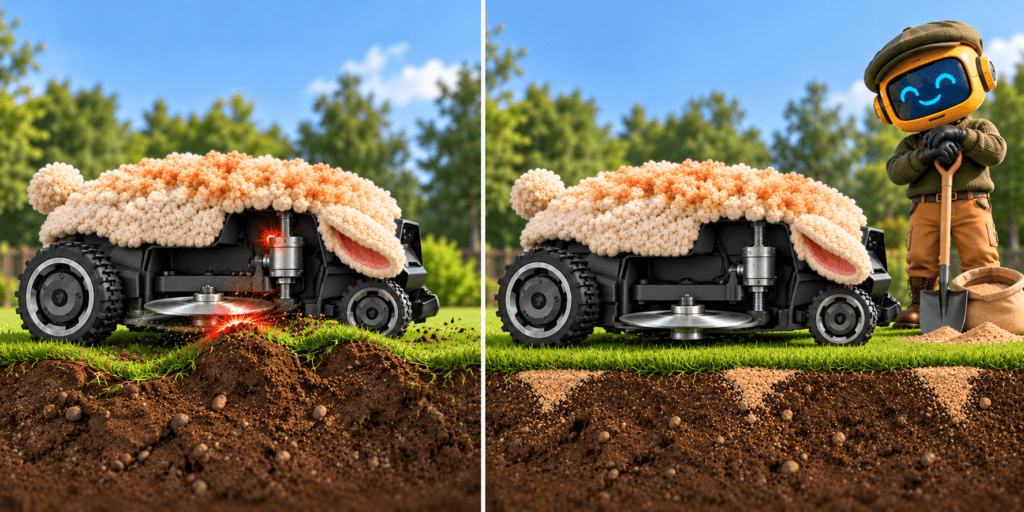
Going low on a bumpy lawn – Level first, then go low.
Everyone wants the lowest cut their lawn can take. On uneven ground, the limit isn’t the app, it’s the bumps. Every hump bangs the cutting motor and the height motor on every pass. Most lawns just need a little sand or a shovel in the low spots. Do that first, then drop the height. You may get your grass lower than it has ever been, but the leveling comes before the drop.
3. Sometimes the RTK Bots, base-station picks its own spot.
The base station picks its spot
An RTK base station needs mostly open sky. It may not end up in your most preferred spot. If you are buying a satellite based robot we highly recommend just having some backup locations because it may not be able to triangulate based on your location picked for your base station and tower. Sometimes your Bot goes to the other side of the house and sometimes you have to elevate the tower and mount it.

Additional Details
Lawn conditions and no-go zones
A robot needs continuous, healthy ground cover to spread its weight. Areas with bare soil, drainage or irrigation problems, severe shade, or thin and sparse growth can sometimes show tracking and wear over time. These areas get modified, excluded, or mapped as their own zone with their own schedule.
Edges
Some perimeter, tight transitions, and complex boundaries will still want a pass with the trimmer. One trimmer’s length is the goal, and it is normal for every autonomous mower.
What barefoot means
Thatch-free and barefoot-walkable describe active growth under proper operation. In dormancy, warm season grasses hold dry leaf tissue and heavy foot traffic can loosen it. That is seasonal dieback, not clipping buildup.